
Here are a few moments that made this survey season memorable.
One of our most exciting sites was a quarry not far from home. At first glance it might not seem like a wildlife hotspot, but it quickly proved to be a haven for pollinators. On our very first visit, we recorded three different species of (Osmia) mason bee. Even more remarkable was discovering that some were nesting inside empty snail shells — a perfect example of how nature reuses and adapts whatever is available.
Later in the year, the quarry revealed another spectacle. Ivy bees had set up a colony along an embankment, and we were lucky enough to witness their fascinating behaviour: males hovering low over the ground, waiting for females to emerge, followed by a “mating ball” forming in a flurry of activity. It’s a natural event few people ever get to see.
The quarry also surprised us with its variety of butterflies, twenty species in total, confirming it as a site of real local importance for wildlife.
Our work also took us to the reed beds and wet grasslands of south Wales. These landscapes are alive with insect activity in summer, and the trip doubled as a chance to share skills with newer team members. Days were spent sweep-netting and identifying species, while evenings brought the excitement of moth trapping, when lights attract species that are rarely seen during the day.
Among the highlights were Brown-banded carder bees and striking sand wasps, both indicators of healthy habitats.
Along the south coast of England, we revisited sites where we’d previously surveyed birds, bats and reptiles. This time, we focused on invertebrates and found that coastal habitats bring their own special communities. Salt-loving species, including the beautifully marked Saltmarsh spotwing fly, showed how even subtle environmental differences can shape which species thrive.
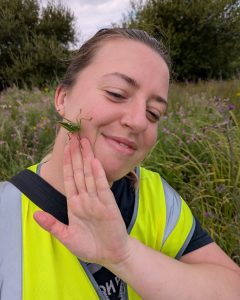
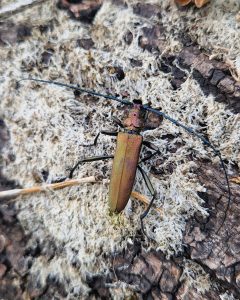
Some insects simply stand out. This year, team favourites included the metallic-sheened Musk beetle and the unmistakably bright Great Green Bush-Cricket. Encounters like these are a reminder that insects can be just as eye-catching as larger wildlife.
Behind the scenes, our work continues long after field days end. Hundreds of specimens were carefully examined under microscopes, helping to build a reference collection that supports accurate identification and training.
Invertebrates are essential to pollination, soil health and food webs, yet they’re often overlooked. By understanding where they live and how they’re doing, we can help protect the habitats they depend on and, in turn, the wider environment.
Baker Consultants is one of only a small number of consultancies with a dedicated invertebrate team, and we’re proud to shine a light on the smaller wildlife that keeps our ecosystems running.
If you’re planning ecological surveys in the coming year, we’d love to help. Get in touch at info@bakerconsultants.co.uk.